
The BA in Psychology course gives you the opportunity to explore how people think, feel, behave, and grow in depth. This undergraduate psychology course introduces you to the foundations of the discipline, including the major branches of psychology, influential schools of thought, and the theories that shape our understanding of human behaviour. At the same time, you will be able to engage with contemporary developments and research practices that define psychology today.
Far beyond concepts, you’ll learn how to observe, listen actively, think critically, and interpret behaviour with sensitivity and context. These skills matter whether you see yourself working in mental health, education, research, organisational settings, or community spaces.
The BA Psychology syllabus blends academic rigour with applied learning. You will learn to examine behaviour across individual, social, and cultural contexts, question assumptions, analyse evidence, and begin developing your own informed perspective on psychological issues.
In the final year, your subject expertise will be deepened on the BA (Hons) Psychology pathway. On the other hand, if you opt for the BA (Research) Psychology pathway, you will gain structured research training and complete a supervised dissertation. This can serve as an excellent starting point if you plan to pursue postgraduate study or move toward academic research.
Whether you are considering BA Psychology after 12th or comparing BA Psychology colleges in Pune, this programme is designed to give you clarity, competence, and direction for the next stage of your academic and professional journey.
Program Structure
Course Name
Course Duration
Last Date to Apply
Top Recruiters & career Pathways

%2FRecruiters_logo1.webp&w=256&q=75)
%2FRecruiters_logo2.webp&w=256&q=75)
%2FRecruiters_logo3.webp&w=256&q=75)
%2FRecruiters_logo4.webp&w=256&q=75)
%2FRecruiters_logo5.webp&w=256&q=75)
%2FRecruiters_logo6.webp&w=256&q=75)
%2FRecruiters_logo7.webp&w=256&q=75)
Program Outcomes
On successful completion of the BA (Hons) Psychology programme, you will:
Achievements

 As per Times Higher Education Global Impact Rankings 2021, Vishwakarma University, Pune is featured in the top institutions amongst 1200 universities from 98 countries/regions. These rankings assess universities against the United Nations’ Sustainable Development Goals (SDGs).Vishwakarma University is conferred with the Emerging University of the Year award in Western India by ASSOCHAM in its 13th Higher Education Conclave 2020.Vishwakarma University Pune has been declared Winner for Excellence in Design Education Award at the World Education Award 2021(Higher Education) held on March 6, 2021 for the project “Industry on Campus and Industry Connect”.

Key Features
A highly sought-after undergraduate psychology programme offering a wide range of electives, skill-based courses, and ability enhancement options to support holistic development.An academic structure designed to build capability and practical skills, alongside strong theoretical foundations.A curriculum that adapts to evolving technological, social, cultural, and economic contexts, keeping learning relevant and future-focused.Learning through diverse pedagogical approaches, including lectures, discussions, practical exercises, and experiential learning.Flexibility to choose minor electives and open electives at both the university and department levels, allowing you to personalise your academic journey.


How to Apply
Apply Online
Applying online is simple and guided at every step.
Visit the official website: www.vupune.ac.in
Click on “Apply for Admission.”
Review programme details, approvals, fees, documents, hostel information, and FAQs.
Once you are ready, click on “Secure Provisional Admission.”
You will then complete the following steps:
Step 1: Fill in your basic details and submit the application form.
Pay ₹2,000 (non-refundable) as the application fee.
Step 2: Complete the detailed Provisional Admission Form.
Pay ₹25,000 (first instalment) to secure your provisional admission.
You will receive important updates and documents via email at every stage.
Keep checking your inbox to stay informed.
Your provisional admission is confirmed once the application form is successfully submitted and the required fees are paid.
Apply In Person
If you prefer personal guidance, you can apply directly at the campus.
Visit the Counselling and Admissions Office
Building No.
5, Ground Floor - Admission Cell
Vishwakarma University, Pune
When you visit, you can:
Get detailed information about the programme, curriculum, and facilities
Clarify eligibility and documentation requirements
Complete your application and provisional admission process
You will need to:
Pay ₹2,000 (non-refundable) as the application fee
Pay ₹25,000 (first instalment) to secure provisional admission
All payments are made digitally (UPI / Debit Card / Credit Card / NEFT / RTGS).
The admissions team will guide you through document submission and eligibility verification.

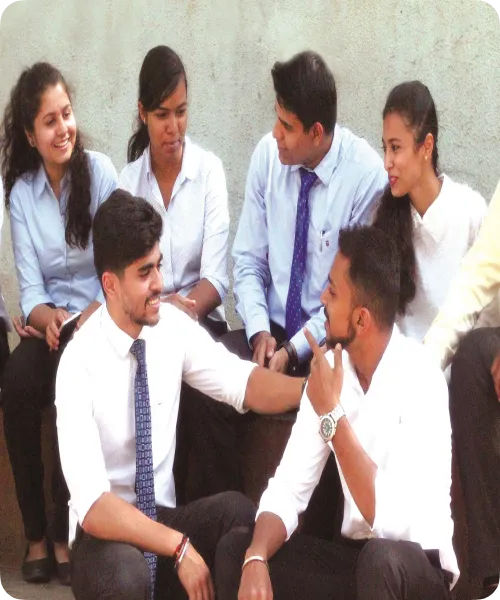


It gives me immense pleasure and pride to say that I’m a student of Vishwakarma university. It is an amazing journey from on campus studying to off campus online education and asse...
Under the NEP 2020 framework, both options are part of a four-year undergraduate programme. If you choose BA (Hons), your fourth year focuses on advanced coursework that deepens your subject knowledge. If you opt for BA (Hons with Research), you will complete a supervised research dissertation in your final year, provided you meet the required academic performance (CGPA criteria). This pathway is ideal if you are considering direct entry into a Ph.D. programme or wish to build a strong research profile early in your academic journey. In short, the research track gives you deeper exposure to academic inquiry and prepares you for higher studies.
To apply for admission in 2026, you must have completed your 10+2 examination from a recognised board with a minimum of 50-55% aggregate marks (as per university norms). Depending on the admission cycle, you may also need to qualify through national-level entrance exams such as CUET (UG) or university-specific entrance tests, followed by a personal interaction or interview process. This ensures that you enter the programme prepared and aligned with the academic expectations of an undergraduate psychology degree.
No, it is not mandatory. You can apply from any stream: Arts, Science, or Commerce. While having studied Psychology in school may give you early familiarity with some concepts, the programme is designed to build your understanding from foundational principles. This means you can confidently begin your psychology journey even if you are discovering the subject for the first time after Class 12.
The curriculum builds your understanding progressively across core and applied areas of psychology. You will study subjects such as: Foundations of Psychology Social Psychology Developmental Psychology Abnormal and Clinical Psychology Psychological Testing and Statistics Research Methodology These subjects ensure that you develop theoretical clarity, analytical thinking, and research competence, preparing you for advanced study or professional pathways.
No. To practice as a licensed psychologist in India, you must complete a Master’s degree in Psychology, followed by specialised training (such as M.Phil. in Clinical Psychology), and obtain licensure from the Rehabilitation Council of India (RCI). Your BA provides the essential academic foundation and prepares you for these next steps, but professional practice requires postgraduate qualification and regulatory approval.
After completing your BA in Psychology, you can explore entry-level roles such as: HR Specialist Counselling Assistant Market Research Analyst Social Worker Research Assistant The degree also prepares you for postgraduate study in specialised fields such as clinical psychology, counselling, industrial psychology, or research-based careers.
Yes. The programme includes practical components such as laboratory work, field visits, and structured internship opportunities. You may gain hands-on exposure in settings such as clinics, NGOs, schools, research organisations, or corporate HR departments. This practical experience strengthens your understanding of psychological concepts and helps you apply theory in real-world contexts.
Copyright © Vishwakarma University, Pune 2025 All rights reserved.


