
Implementation Report of NEP 2020 at Vishwakarma University, Pune
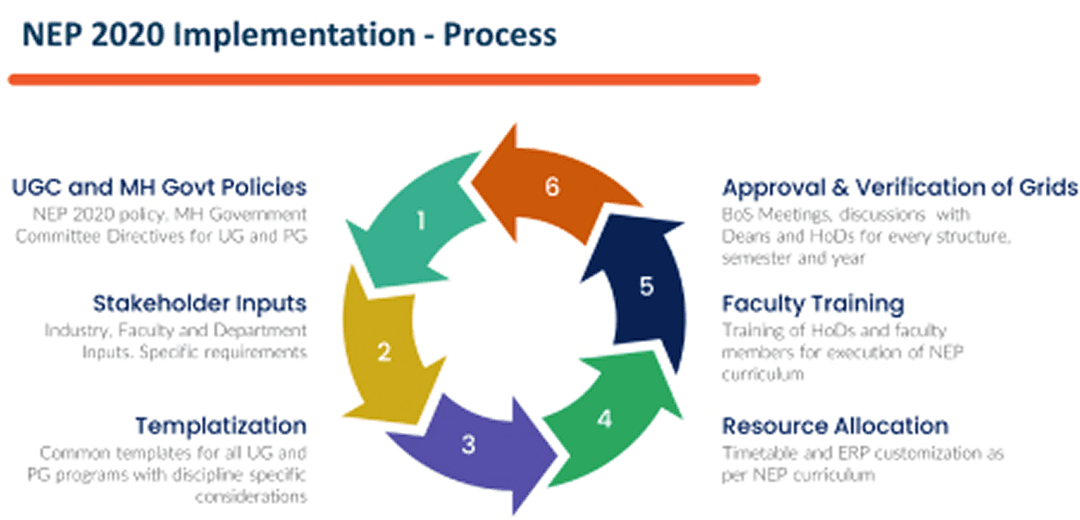
The National Education Policy (NEP) 2020 is designed to transform India’s educational landscape by promoting holistic, multidisciplinary, flexible, and skill-based learning. As part of its commitment to educational innovation and academic excellence, Vishwakarma University's NEP 2020 implementation aligns with the guidelines issued by the Government of India and the Government of Maharashtra.
The VU Pune National Education Policy implementation framework focuses on creating a student-centric learning environment that encourages multidisciplinary education, skill development, research, flexibility, and holistic growth. Through its academic reforms and curriculum redesign, the University continues to align its educational practices with the objectives of NEP 2020 higher education reforms.
Key Implementations
- 1. Curricular and Credit Framework k
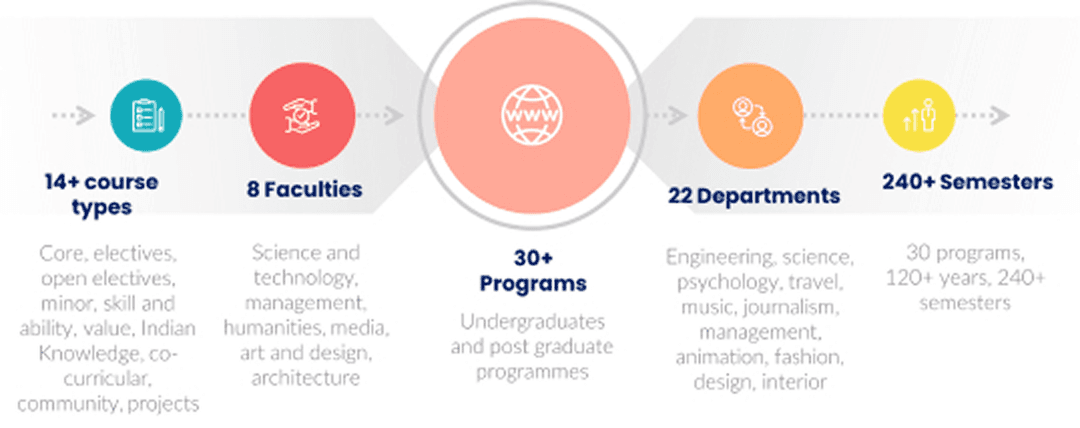
- The University has adopted the new credit and curricular framework, applicable from the academic year 2023–24, for undergraduate (B.A., B.Sc., B.B.A., B.Des.) and postgraduate (M.A., M.Sc., M.B.A., M.C.A., M.Des.) programmes, excluding those regulated by bodies such as AICTE, PCI, BCI, CoA, NCTE, etc.
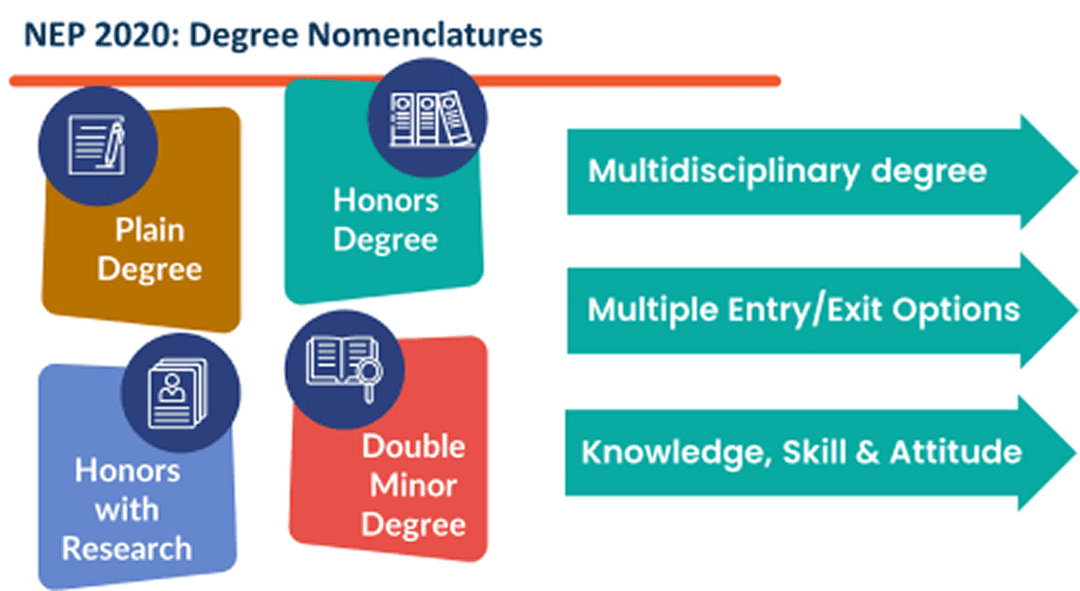
- The VU Pune NEP curriculum structure includes the introduction of a flexible three/four-year undergraduate programme with multiple entry and exit options, enabling students to earn certificates, diplomas, or degrees based on credit accumulation and progression.
- 2. Multidisciplinary and Holistic Education
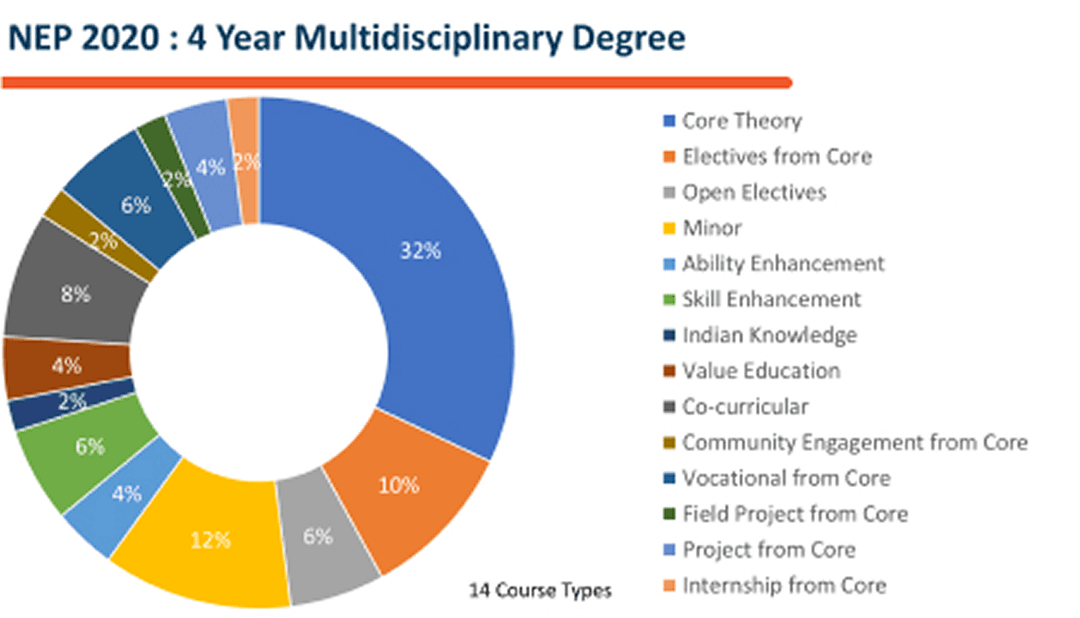
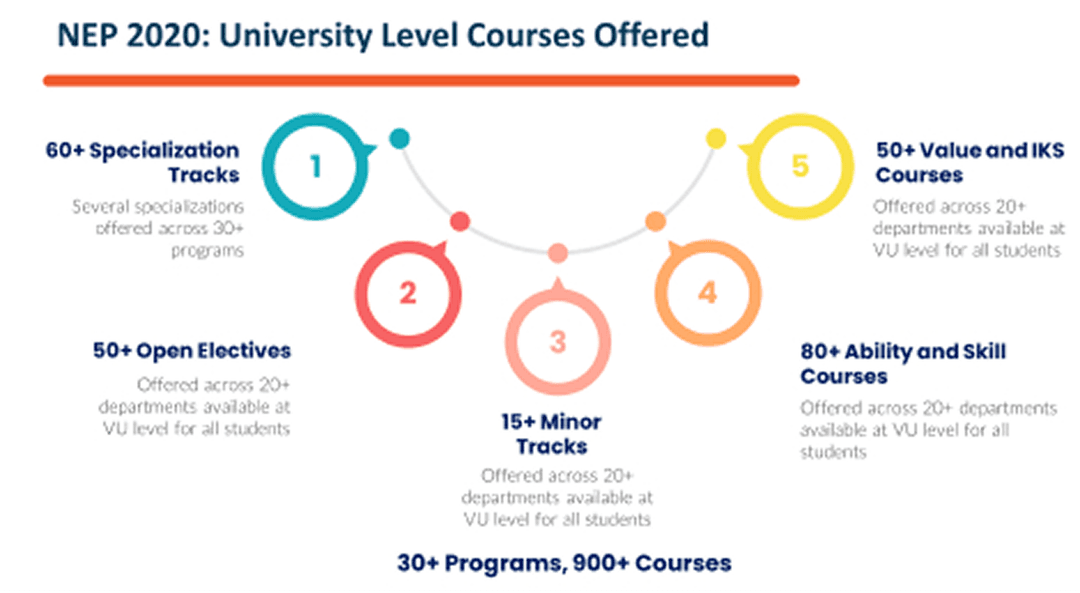
- The curriculum emphasises a blend of major, minor, and elective courses, supporting multidisciplinary education under NEP and encouraging broader academic exploration.
- Vocational and skill enhancement courses, along with the integration of Indian Knowledge Systems (IKS) and Value Education, are included to provide a holistic educational experience.
- 3. Multiple Entry and Exit Options
- The framework provides multiple exit points after the completion of one, two, or three years of study, with corresponding certifications, diplomas, or degrees. This multiple-entry-exit system offers flexibility and supports diverse student learning pathways.
- 4. Skill Development and Vocational Training
- The curriculum incorporates vocational skill courses and internships to enhance employability and practical learning. Hands-on training is provided in alignment with major and minor disciplines to bridge the gap between education and industry requirements.
- Community engagement courses are also integrated into the curriculum to sensitise students to societal challenges and encourage responsible citizenship.
- 5. Flexibility in Learning
- The University offers flexibility for students to move between disciplines and institutions, enhancing their learning experiences and academic mobility.
- Alternative learning modes, including offline, online, and hybrid delivery models, are also available in accordance with UGC guidelines and broader digital education initiatives under NEP.
- 6. Evaluation and Continuous Improvement
- The implementation of Vishwakarma University's NEP framework remains under continuous review to ensure that academic practices, curriculum design, and learning outcomes remain relevant and aligned with the evolving educational landscape.
- Vishwakarma University, Pune, has taken significant steps towards implementing NEP 2020, fostering a more flexible, multidisciplinary, and skill-oriented education system. These initiatives support a more learner-centric academic environment while aligning with industry needs, societal expectations, and global educational standards.
Reference
- 1. NEP 2020 Policy, Ministry of Education, Government of India
- 2. Credit & Curriculum Framework (other than those regulated by AICTE, PCI, BCI, CoA, NCTE etc) for UG Programmes dated 20 April 2023, Ministry of Higher & Technical Education, Government of Maharashtra
- 3. Credit & Curriculum Framework (other than those regulated by AICTE, PCI, BCI, CoA, NCTE etc) for PG Programmes dated 16 May 2023, Ministry of Higher & Technical Education, Government of Maharashtra
- 4. Credit & Curriculum Framework (other than those regulated by AICTE, PCI, BCI, CoA, NCTE etc) for Engineering Programmes (AICTE) dated 04 July 2023 & 3 August 2023, Ministry of Higher & Technical Education, Government of Maharashtra